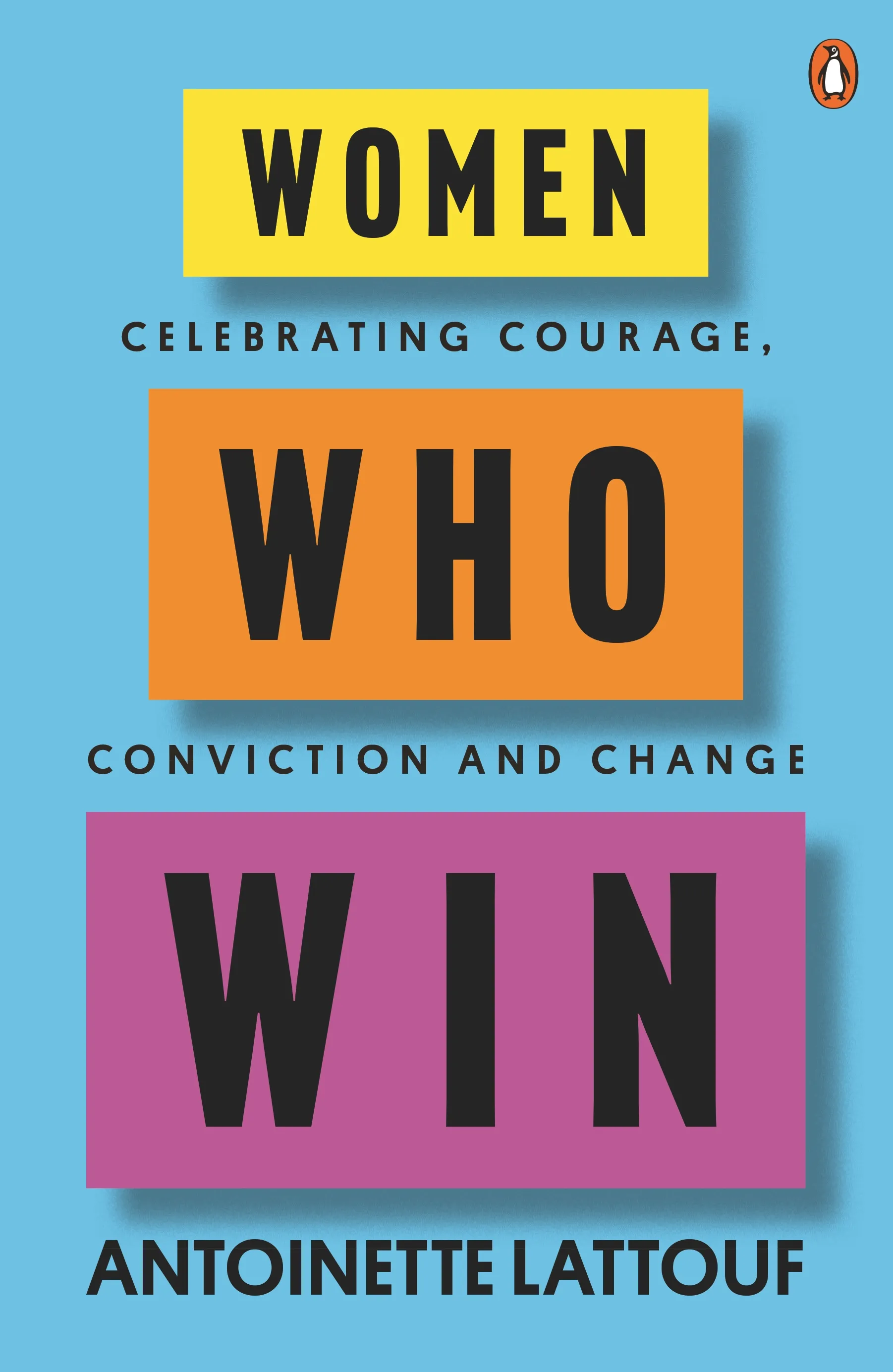
WOMEN WHO WIN
By Antoinette Lattouf
(Penguin Random House)
4.5 out of 5 stars
***
There’s a particular kind of exhaustion that comes from watching history repeat itself in real time. It seems that the basic rights that once felt settled have suddenly become bargaining chips again, public debate feels crueller, and media cycles continue to reward outrage over empathy. And for queer people, women, disabled people, Aboriginal and Torres Strait Islander communities, and culturally diverse Australians, the backlash can feel relentless. That’s why Women Who Win landed with such force for me.
Antoinette Lattouf’s book is more than a collection of stories about extraordinary women, it’s a reminder that progress has never been freely handed over. Every right, every protection, each moment of visibility has come because someone was willing to push back against those determined to silence them.
Reading this book in 2026, amid escalating attacks on trans and gender-diverse Australians and increasingly imported culture-war politics, it felt strangely therapeutic. Lattouf herself described writing the book as a healing process after her highly publicised legal battle with the ABC, and that sense of catharsis is present on every page. The result is empowering without ever feeling naïve.
Women Who Win introduces readers to First Nations leaders resisting colonial violence, climate activists and scientists fighting for the future, pioneering sportswomen, and the women behind Australia’s first successful sex-discrimination class action. What connects these stories is not just achievement, but resistance. Again and again, these women sacrificed safety, reputation, careers, and social acceptance to challenge systems designed to keep them quiet.
That tension gives the book its emotional weight. Lattouf never presents feminism as a one-dimensional concept, instead, she approaches each story through an intersectional lens, recognising how race, class, disability, religion, sexuality, and culture shape vastly different experiences of womanhood.
What also makes the book special is Lattouf’s voice itself. She writes conversationally, with wit and humour, even when unpacking deeply traumatic or infuriating moments. There’s an ease to her storytelling that makes complex conversations around misogyny, colonialism, media power, and systemic discrimination feel accessible without losing their depth.
One of the book’s strongest ideas is that while women in Australia have undeniably gained rights and freedoms, the mechanisms used to silence people have simply evolved. The barriers may be subtler but remain deeply effective, whether it is reputational attacks, media pile-ons, political dog-whistling, or economic insecurity. Lattouf’s own story shows exactly how that silencing operates today.
For LGBTQIA+ readers especially, the book resonates in complicated ways. At a time when anti-trans rhetoric is becoming increasingly normalised in political and media spaces, Women Who Win feels like a call to resist apathy. Rather than leaving me overwhelmed by the constant war on people’s right to exist, it reminded me that solidarity is an active choice, that allyship requires speaking up, and institutions only change because ordinary people refuse to accept the version of the world handed to them.
The book isn’t flawless. There are occasional tonal shifts that feel unexpected and the queer representation feels thinner than it could have been given the broader themes around intersectionality and systemic discrimination. At times, I found myself wanting deeper engagement with LGBTQIA+ voices and histories alongside the other stories being told. Still, those shortcomings don’t undermine the power of what Lattouf achieves with this book.
Women Who Win is sharp, funny, angry, compassionate, and deeply human. Most of all, it arrives as a timely reminder that the people who shaped a more equal Australia were rarely welcomed while they were doing it, and yet they changed our country anyway.
In a world where those in power seek to silence marginalised communities by making them feel exhausted, disillusioned, and small, Women Who Win offers a refreshing reminder: progress has never come without a fight.
Review by Sarah Piper