Representation in media is a topic that is widely talked about in various spaces from the heads of countries to your mother’s book club. It is a very important topic to discuss, especially the difference between ‘good’ and ‘bad’ representation. There is no definitive way to make representation of quality and no concrete definition. This essay will discuss two popular examples of queer representation and what conclusions we can make about the quality of the representation based on their characterisation and individual plotlines. Written by Emma Blair.
***
Why does it matter?
As a child I didn’t feel very different from my peers. I had a couple good friends and fitted in well enough. I loved (and still love) stereotypical things for my AGAB (assigned gender at birth). One day I watched my brother play Deltarune. Kris, the character you take over the body of to play, is non-binary. I had known vaguely about non-binary people before this but Kris was my first real introduction. I identified with Kris and Deltarune is a notable touchstone in my journey of exploring my gender. Representation helped me understand myself better, but not only that. Kris was one of the first non-binary characters my brother knew and talking about them helped him better understand and get more used to using the singular ‘they’ pronoun. Representation helped me understand myself and helped my brother understand me. (This is written shortly after chapter 5 came out).
Showing queer characters in media helps people empathise with others and shows people that they can be themselves. If a trans woman does not know that transgender people exist, she will still be trans, she will just be unhappy and be forced to live with her dysphoria. The mindset of ‘it’s hard to be if you can’t see’ is important in discussions of representation. Young women who do not see women as doctors or lawyers are far less likely to see a career in those fields as a possibility. Representation can also affect people’s self-esteem. If the only people they see being called beautiful are people that they share few resemblances with, then they are more likely to have low self-esteem or be insecure about their body.
I interviewed some young queer people, and one anonymous responder said, “Representation matters because without it, people might not feel like they belong. Humans, by default, want to fit in”. Another elaborated: “Realistic representation is what is most important. Only relying on stereotypes can be harmful to any minority group”. This really demonstrates how quality representation is important for making people feel like they belong and that they are valid in themselves.
I also asked my interviewees if they believed the morality of the character played a role in how effective or of quality the representation is. The overall perspective was that the morality doesn’t matter—and that even having LGBTQ+ people in villain roles is good because it means that there’s more diversity. There is more depth to that however, as one stated that: “The more common queer representation is, the less it matters whether a villain is queer. But when queer villains are the only sort of representation presented, like it has been historically, audiences learn to associate queerness with immorality.” Another corroborated this idea saying, “I think queer characters can be morally bad as long as a message isn’t being pushed that ‘queer=awful’ person.” This topic is particularly interesting as many famous Disney villains have been cited as examples of ‘queer coding’ (examples include Ursula, Hades and Scar).
Mean Girls
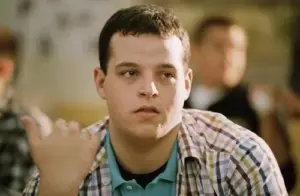
Mean Girls is a classic 2000’s movie about a young woman who moves to America from Africa and who struggles to find her place in a new, unfamiliar school. A major plot point is her relationship with Janice Ian, a young alternative woman who has a grudge against the most popular girl in school—and Damian Leigh (Damian Hubbard in the stage musical), the best friend of Janice who is ‘too gay to function’. Damian is the character I’ll focus on, because while widely beloved by fans of the movie and musical, some choices in his portrayal should be investigated further. His main role in the story is to be the gay best friend for Janice, who’s rumoured to be lesbian. He is written as the classic, stereotypically gay best friend: he is effeminate, he goes into the girl’s bathroom with Janice to check on Cady and he groups himself with the girls when they are split for the talk at the climax of the movie. He tags along with all that Janice does and has no real agency in the story. This is not to say that gay men cannot be effeminate and prefer the platonic company of women to men—but Damian’s character pushes it to the extremes. An argument could be made that this movie pushes every stereotype to the extreme—whether it’s teenage girls wearing stiletto heels to school and sitting at strictly segmented tables at lunch—but having the only ‘out’ student at this school being this stereotyped, is not good. The whole movie enforces stereotypes about teenage girls being mean and catty, along with the dumb blonde and their gay best friend. As an incredibly popular movie for kids and teenagers, it can be influential in forming these viewers’ opinions of the world and the way they perceive the world around them. This is in no way a hate message to Mean Girls or to the character of Damian. There are gay men who do act very like him but presenting his behaviour as inherently gay, it isolates straight men who act effeminately/enthusiastically as well as making gay men feel as though they must act like Damian to be valid.
Undertale
Undertale is a cult classic game created by Robert F Fox (Known primarily as Toby Fox) in 2015. It includes many characters who are, or could be read as queer, from the non-binary humans to the non-binary ghosts. You play as a young human child who has fallen into the underground, which acts as the home of monsters after being sealed away from the outside world. You move through the various locations in the underground, encountering monsters who you can choose to kill or to spare with the final goal to reach the barrier and find your way home. You can play a role in matchmaking the nerdy royal scientist Alphys with the head of the royal guard Undyne through a series of humorous miscommunications. It is an incredibly popular game, especially as it’s independently made and based off a fever dream. The fans of the game praise it for its realistic depictions of LGBTQ+ characters and the way they are treated as normal, rather than built on stereotypes. Toby Fox himself says that he is glad that his story has given people exposure to a story where queerness is treated as normal.
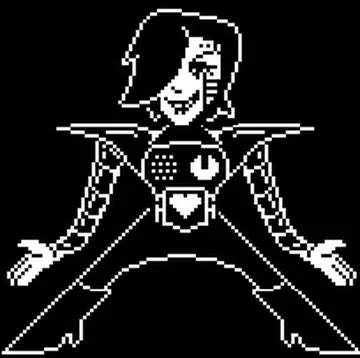
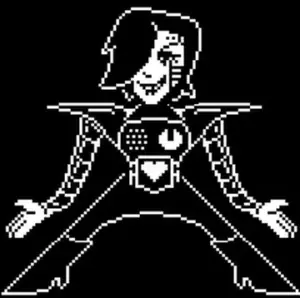
One of the queer characters in Undertale is Mettaton. He is introduced as a blocky murder robot who has retired to be a television host; in fact, he is the only television host in the whole underground. When Mettaton fights you, you flip the switch on his back that causes him to transform from the blocky robot body to the dream body he designed. It is feminine with bangs and high heeled boots. His attacks feature high-heeled legs and disco balls, evoking ideas of drag shows or a party. Mettaton’s transformation is very clearly a transgender allegory, with his life as a ghost being pre-transition, his time as a blocky robot mid-transition and his final form being his final transition and the stage he is happiest in. He also challenges gender expectations with his femininity.
Conclusion
I think that Mettaton is interesting to compare to Damian because while both are effeminate gay men, one’s femininity is treated as the punchline while the other’s is celebrated as self-expression. Overall, I believe that Damian is a poorer representation of a queer identity because his character is based on harmful stereotypes of femininity and the sidelining of LGBTQ+ characters and voices. I believe that Mettaton is better representation because he explores themes of self-expression and gender in a world where being queer is not treated as an anomaly.
Bibliography:
Rawan Elbaba (11/14/19) PBS. https://www.pbs.org/newshour/arts/why-on-screen-representation-matters-according-to-these-teens
Danny Jackson. (10/28/20) Medium.com https://medium.com/cinemania/janis-ian-from-mean-girls-should-have-been-gay-bbcd76fd6839
Team Writer. (19/9/24) Reconciliation South Australia. https://reconciliationsa.org.au/stories/why-does-representation-matter
Rayna Larrea, Jill M Swirsky (31/7/23) PSI CHI. https://www.psichi.org/blogpost/987366/491881/That-s-So-Fetch-Social-Psychology-Themes-in-Mean-Girls
Bonnie Rugburg (2018) Transformative Works and Cultures. https://journal.transformativeworks.org/index.php/twc/article/view/1516/1866
Ruth Graham (7/12/17) Slate. https://slate.com/technology/2017/12/jerry-falwell-and-tinky-winky-the-gay-teletubby.html
Ben Long. (20/4/17) University of Wollongong https://www.uow.edu.au/media/2017/theres-something-queer-about-disney-villains.php
Fox R, Chang T (2015) Undertale Self Published
Mark Waters (director) (2004) Mean Girls [Film] Broadway video, distributed by Paramount