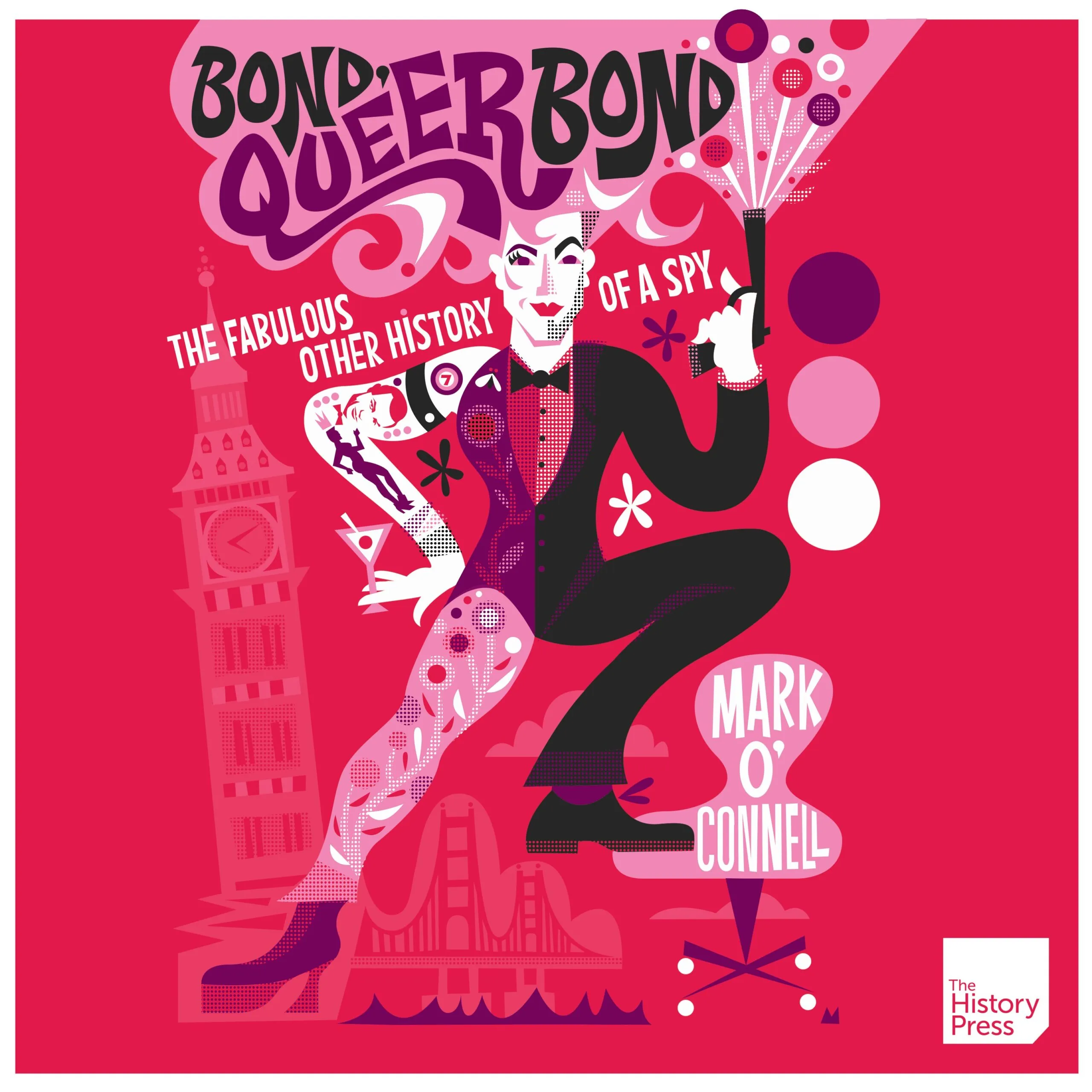
‘BOND, QUEERBOND – THE FABULOUS HISTORY OF A SPY
By Mark O’Connell
(The History Press)
4 out of 5 stars
***
‘Queer’ and ‘James Bond’ are not terms you would necessarily expect to go hand in hand. Maybe not on the surface, however, a new book sheds light on the unexpected queer influences, connections and subtexts that link the films and novels of the famous double agent to a distinctly non-heteronormative world.
In Bond, Queerbond – The Fabulous History of a Spy, Mark O’Connell celebrates the queer designers, authors, musicians and artists who gave Bond his “eternal swagger and iconic aesthetic”.
O’Connell is no casual speculator trying to shoehorn an agenda onto the films. He is a highly knowledgeable Bond expert who has spent years researching the franchise. He was also raised in 007 culture; his grandfather drove the Broccoli family — the dynasty behind the Bond films — giving him an unusual childhood window into the world of Bond.
For starters, who knew that Bond creator Ian Fleming himself was such an ally, at a time when it was decidedly unfashionable to be so?
Steered partly by his wife Ann’s love of the gay glitterati and the cultural elite, Fleming frequently hosted artists and writers at Goldeneye, the couple’s legendary Jamaican estate. One such guest was the flamboyant and notoriously waspish Truman Capote, who Fleming initially got on surprisingly well with — although Capote later turned on him, as he so often did with former friends and acquaintances.
Beyond merely socialising, Fleming connected with queer creatives who would play vital roles in shaping Bond’s world. Artist and illustrator Richard Chopping, who designed the distinctive original Bond book covers, was openly gay at a time when homosexuality was still illegal in Britain. His striking imagery of guns, skulls and roses became inseparable from the Bond brand.
O’Connell goes into fascinating detail about Chopping and his partner Denis Wirth, who lived a defiantly hedonistic lifestyle in a converted pub in rural Essex, complete with an open relationship, hook-ups with young soldiers, and visitors including notorious painter Francis Bacon.
According to O’Connell, Fleming and these queer men may initially seem worlds apart, but they shared more similarities than you might expect. “They may have been at opposite ends of the table when it comes to sex but they had not disparate ways,” he argues. Bond became “a perfect vehicle for this off-kilter and slightly kinky worldview”.
Moving onto the films, Bond theme songs and soundtracks were another area where queer men had significant influence.
Lionel Bart — the hugely successful and openly gay songwriter behind Oliver! — composed the theme to From Russia with Love, sung by Matt Monro. O’Connell argues that Bart effectively established the template for all future Bond themes: smoky ballads filled with longing, secrecy,and dramatic tension. He identifies in them “a very specific queer longing” — songs about desire, fantasy and wanting what, or who, you cannot have.
Behind the camera, queer creatives also helped shape Bond’s visual identity. Peter Hunt, editor of the first six Bond films and director of On Her Majesty’s Secret Service, played a major role in establishing the franchise’s sleek masculine aesthetic — while covertly injecting it with homoerotic tension.
O’Connell points to the fight scene between Sean Connery’s Bond and Red Grant aboard the Orient Express in From Russia with Love – where Hunt’s camera “expertly frames the cut and tailoring of Connery’s trousers”.
As filmmaker and queer commentator Michael Varrati notes in the book, Hunt simultaneously showcases Bond’s “virility, strength and sexuality”, while giving audiences “two brutish, good-looking men in a constant, bloody embrace”.
It works on two levels: reinforcing Bond’s ‘aspirational’ masculinity while also presenting male beauty and physicality in a way that can be appreciated by everyone.
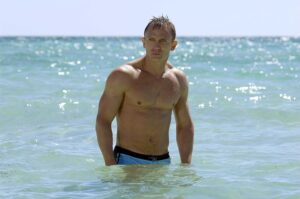
The book also touches on how the Bond franchise has gradually flipped the male gaze in more recent years. When Daniel Craig emerged from the sea in tight swimming trunks in Casino Royale, the scene was an intentional inversion of Ursula Andress legendary rising from the ocean in Dr No. Bond had now become the objectified himself.
Fashion, too, has increasingly carried queer influence. Designer Tom Ford, one of the world’s most high-profile gay creatives, was brought in – to shape Bond’s (now played by Danile Craig) wardrobe for Quantum of Solace, helping redefine Bond’s masculinity and sartorial image for a modern audience.
Queer-coded characters also appear surprisingly frequently throughout the franchise. In Diamonds Are Forever, assassins Mr Wint and Mr Kidd are portrayed as a darkly comic gay couple, finishing each other’s sentences and casually holding hands between murders.
Then there is Grace Jones’ unforgettable May Day in A View to a Kill — an aggressively androgynous, hyper-stylised figure who radiates masculine energy while still seducing Bond himself.
Despite criticisms that Bond is outdated or overly macho, O’Connell convincingly argues that the franchise has long held an unexpected appeal within queer culture.
That even extends into drag. During the late 1970s and ’80s, New York drag troupe Sluts A-Go-Go performed camp Bond-themed musical parodies in clubs, with wonderfully ridiculous titles such as From Russia with Guns and Oldfinger.
The troupe’s musical director Timmy Spence tells O’Connell that You Only Live Twice particularly resonated with gay audiences. “The concept of it, something so obvious that you live these two lives” — a metaphor that will strike a chord with many queer people who grew up hiding parts of themselves.
There are moments where the book slightly over-labours its queer connections, occasionally stretching to figures on the fringes of Bond culture simply because they briefly overlapped socially with those involved in the franchise.
Still, there is no denying O’Connell’s knowledge, enthusiasm and genuine affection for his subject. What he has ultimately produced is a colourful, entertaining and genuinely fascinating alternative history of one of popular culture’s most enduring icons.
Review by James Leon