A terror attack on Berlin’s Christopher Street Day (CSD) Parade has distressed many Berliners and stirred debate about the city’s security measures, writes Liam Heitmann-Ryce-LeMercier.
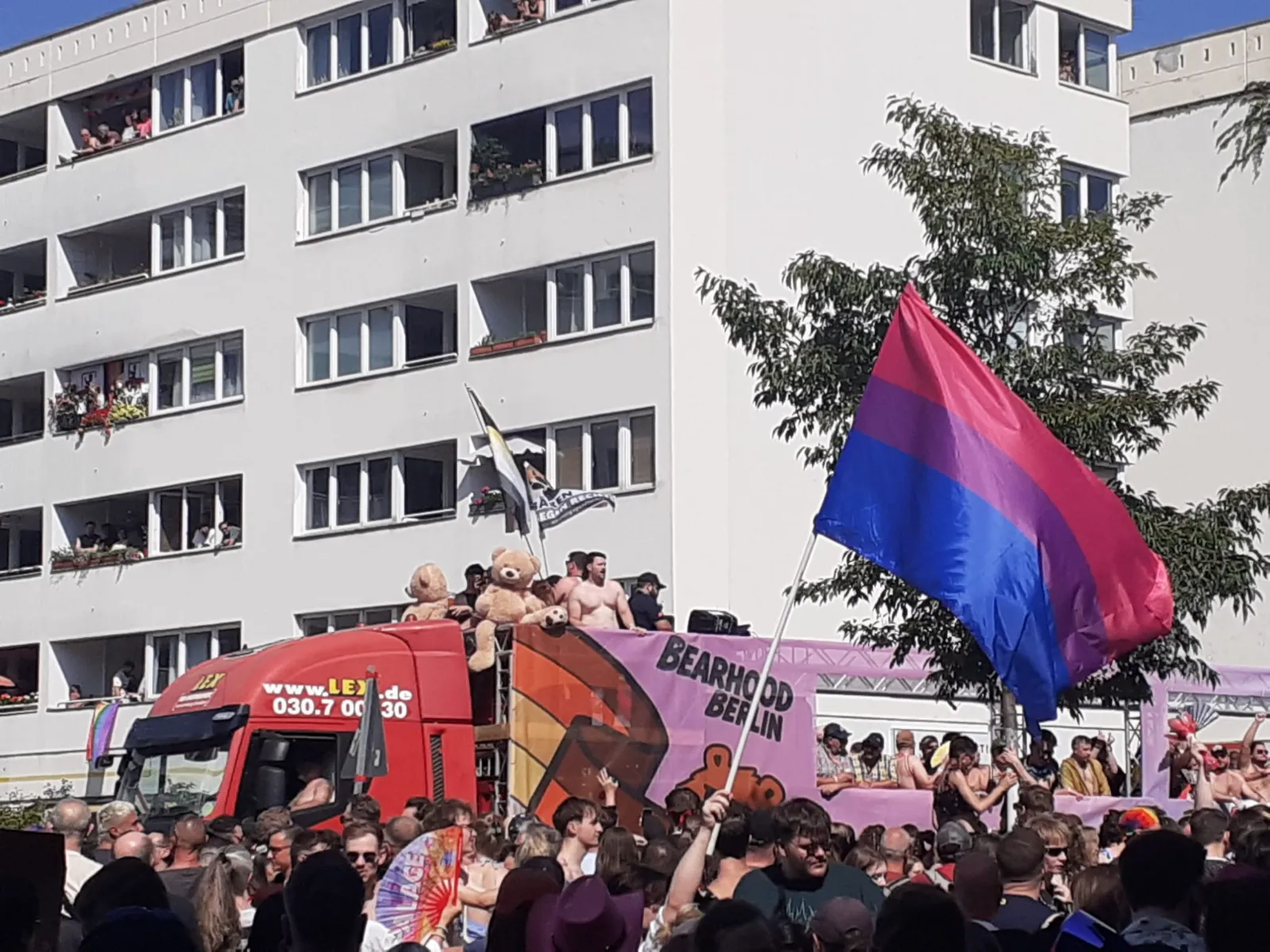
At around 10pm on Saturday 25 July, during Berlin’s CSD Pride celebrations, a 21-year-old man deliberately drove a van into a crowd of people in the Tiergarten public park. The attack left one woman dead and injured 29 others in a targeted action that has since been recognised an Islamic State terror attack.
The suspect, a German citizen named Abdul Ballout, was previously known to police as an active sympathiser of Islamic State (IS). In 2025, he attempted to join IS loyalists in Syria but was apprehended in Lebanon (his family’s country of origin) and was returned to Germany.
Just a day after the CSD attack, on July 26, Ballout was shot dead by police in Spandau, west of central Berlin, after he rushed at officers carrying a bladed weapon.
The incident has not only left a fresh scar on Berlin’s LGBTQ+ community but raised debate in Germany more broadly as to the swift politicisation of the attack. The incident was quickly labelled as Islamic terrorist attack, generating fears that Germany’s Muslim community will be directly linked with the CSD attack.
‘Queer-allied Muslims are in a dangerous spot right now’
Obaid, a 29-year-old Muslim, is a software engineer currently living in Europe. While he does not subscribe to what he calls “mainstream Islamic beliefs”, he does come from a somewhat conservative Muslim background. This grants him a deep understanding of the various groups and subgroups that comprise the Muslim faith.
“I think everyone feels incredibly frustrated with how quickly attacks like these are politicised,” he says of the response to the CSD attacks and how strongly it feeds into basic ‘all Muslims bad’ ideology. “Most sensible folks realise the same group of people who use this to drive political agendas also tend to be homophobic or associated with known homophobes.”
A clear example of this thinking is found in the response of the far-right, anti-immigration AfD (Alternative für Deutschland) political party in Germany. Interior policy spokesperson Martin Hess used the attack as an opportunity to undermine the current government’s security measures. “If an Islamist ‘threat actor’ known to the police was able to commit such an act, there must be a thorough investigation into why he was able to move about freely in the first place,” he said.
Obaid emphasises the primary motivation for terror attacks like this are to instil fear but also to fortify divisions between Muslims and other cultural groups.
“Terrorists desperately want Muslims to feel unsafe in Europe because the resentment this breeds is exactly what drives recruitment for these terror groups,” he suggests.
Obaid marched in the CSD parade in 2024 alongside many other Muslims who were in attendance. He held fears even then that an attack such as the one perpetrated this weekend could take place. Reading the news this week has been gut-wrenching, he says.
“People also seem to forget that queer and queer allied Muslims are in a dangerous spot right now,” he says. “They are often the primary target of Islamists as well as far-right extremists who would love to see them deported back to countries where they would almost certainly face harm. This threat is constant and real.”
Obaid cites the murder of Muhsin Hendricks last year, who was an openly gay imam, as an upsetting recent example. Nevertheless, he maintains that the heightened animosity toward Muslims is primarily an online phenomenon.
“In the real world, life continues normally,” he says. “Younger Muslims are definitely more progressive and more vocal so this is having a pretty positive effect. I used to feel pretty enclosed and disillusioned when terror attacks like this happened. It’s important to push through feelings like that and get offline.”
‘It is still difficult to find the right words’
Katharina, 43, a lifelong Berliner and German-language teacher, is still shocked by the events of this year’s CSD. Her predominant feelings are a mixture of sadness, betrayal and helplessness. Amidst this, however, she retains a determination not to let other people dictate her life.
“It is still difficult to find the right words to describe the mixed emotions, fears and hopes,” she admits. “It is hard to bear how politicians now seem to be using the upcoming German election for grand rhetoric when what we actually need is concrete action. I do not want to feel unsafe in my own hometown because of years of mistakes in migration policy and the justice system.”
Katharina has experienced verbal attacks on queer people more than once on Berlin’s public transport and has felt a need to avoid certain areas of the city due to lack of police presence. The unwelcome glances she has received, both as a woman and a queer person, comes from this need for heightened security presence.
“It makes me sad and angry that I have to voice that as a Berlinerin,” she professes. “As someone who has grown up in this city, who has always valued and loved its diversity, who is teaching international students, migrants, refugees. I firmly believe in our community and trust my friends. We are stronger together. But the strength in our community alone will not be enough when such hatred still exists and is tolerated – or ignored – by politics. We should not need to fear for our lives again.”