In more than a century of top-flight Australian Rules football, not one male player has publicly come out as gay or queer while playing. A new documentary, The Last Closet, sets out to ask why, and what it would take to change.
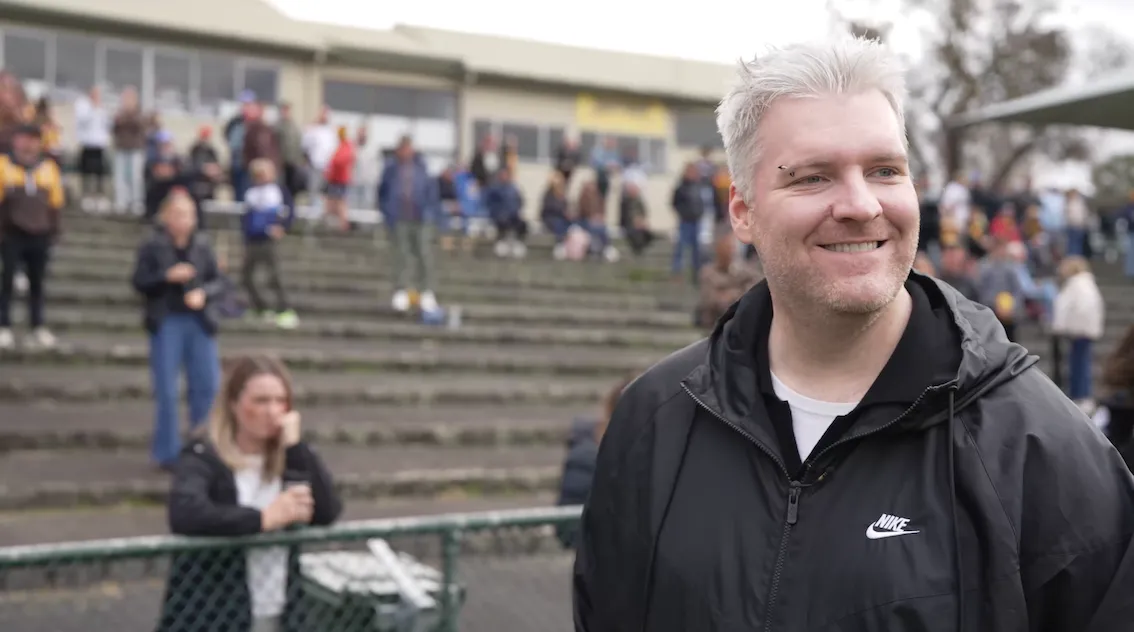
At the centre of the film is Reese Leigh, a lifelong Essendon fan and queer rights advocate who is tired of waiting. “In over 100 years, no man could put his hand up and say ‘I’m a dude who likes dudes’,” he says, “and as a dude who likes dudes, that was really disappointing to me.”
The documentary argues that the AFL is the only top-tier league of any sporting code in the world never to have had an openly queer male player, and it examines the “boys club” culture it says keeps men from doing what they love because of who they love.
Reese brings years of lived experience to the question. As a long-serving committee member of the Purple Bombers, Essendon’s LGBTQI+ supporter group, he has seen first-hand the cultural and political hurdles facing queer inclusion in the game, and the intimidation that queer fans and athletes still encounter.
To understand what a closeted career looks like, he turns to men from other codes who have been there. Former A-League footballer Andy Brennan describes playing while hiding his sexuality, and the constant, low-level hypervigilance that comes from never knowing how teammates would react “if they see the real you”. He calls it probably the worst he has ever felt.
Rugby league great Ian Roberts, who famously describes being gay as his “superpower”, reflects on how far the damage of anti-gay behaviour reaches beyond the field. “Hearing all those slurs, it might be water off a duck’s back for some,” he says, “but for someone else in that same crowd it’s ‘that’s me – he’s talking about me.'”
Dr Ryan Storr, a researcher specialising in LGBTQI+ inclusion in sport, adds data and real-world examples to the conversation, including the mental health toll on athletes and fans who face setbacks because of their identity. He points out that closeted athletes often don’t perform at their best, citing Olympic swimmer Ian Thorpe. “Could he have gone faster? Who knows?” Storr says. “But he had to grapple with those things on a day-to-day basis.”
The film also confronts the increasingly loud argument that sport and “politics” shouldn’t mix. Reese opens up about his own experience with that rhetoric, which took a serious toll on his mental health and became a turning point in his queer identity.
Fans have their say too, with many calling on the wider football community to recognise that the current culture is unfair to queer men, and urging the AFL to understand that diversity, equality and inclusion for LGBTQI+ people in footy is non-negotiable.
The Last Closet also spends time with the Melbourne Chargers, an all-inclusive rugby team whose players explain why representation matters and where the major codes are falling short. Chargers player Chris credits sporting bodies with doing good work, but says they remain “reactive rather than proactive”. “I like what they’re doing,” he says, “but I want to see more.”
For Reese, the documentary is a starting point rather than a final word. He hopes LGBTQI+ sports fans everywhere will watch it and add their own experiences to the push for equality in sport.