MR BIG aka Tatay, A Transwoman and That Tiring Tune! by Dax Carnay-Hanrahan
fortyfivedownstairs, Melbourne
Wednesday 24 June – Sunday 5 July 2026
3 out of 5 stars
Reviewed by Christos Linou
***
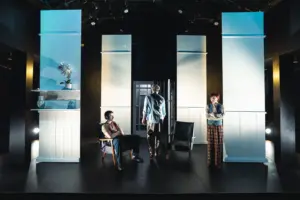
The Mr Big performance was staged in the 45 Downstairs Theatre space and created a dreamy effect where the membranes of life and death haunted the space. The use of film projection and backlit transparent curtains suggested the concept of a timeless phantom zone that positioned the ghosts of the performers to speak and sing out to their own characters in a madness of “Who’s there?” The set design centred around a family kitchen table, allowing the actors to immerse themselves in the locations of home, be it in Manila or Melbourne. The syncopated sound design held the actors in a state of trance and madness that was an effective mechanism to grasp the shattered time differences of the family scenes from the Philippines to Australia.
The performance is played out as a series of ironic and comic-filled moments of Diana, the main character (played by Dax Carnay-Hanrahan), who is a transwoman in states of hysteria trying to plan her wedding in Australia and polarised by the obligation of cultural loyalty to her family in Manila as she also tries to plan her father’s funeral. Compassion coupled with patriarchal obligations to follow in the footsteps of the father when the son is secretly gay, queer and bent on exploring gender identity as a transwoman, when the essence of the father still resides inside the son.
Indeed, there are secrets, lies and deceptions and an unwillingness to tell the truth to one’s parents about their gender and how it affects the essence of understanding the other person’s needs, wants and desires about coming out and claiming one feels like a woman rather than a man. However, the perception about cutting off a man’s penis and then claiming they are a woman is a lie from the eyes of the patriarch, that ironically echoes the toxic hate speech vocabulary of Pauline Hanson’s ugly verbal vomit. People of colour, of faith, of gender, or type belong to a multi not a mono, and the play captured this social political zeitgeist when Diana danced across the stage in a fit of rage delivering her monologue and she said, “You the audience, finally seeing us, trans people, immigrants – beyond the caricature, and beyond whatever the fuck Pauline Handson says we are.”
This is the type of performance where right-wing political stereotypes need to be accounted for and engage in the struggles of difference and of the emotional foibles we all possess as humble humans all seeking a rite of passage in one’s life; to have the empathy and compassion to try and “love thy neighbour,” be it hard, easy, tough, loving, unusual, different, but with an open mind to be astounded by another person. This is the essence of the play and of the LGBTQIA+ community’s force of resilience and of change in ways that evolve self and create a dialogue of what it means and feels to be in-between.
Diana is haunted by the absent love of her father (played by Trevor Santos), who never accepted her as a transwoman and is in a constant state of uncertainty, not knowing what happened to his long-lost son, triggering the father to self-implode. His dynamic, fast-paced dialogue slipped in and out of reminiscing about the need to be loved by his son and idolising his guitar as a medium to capture the memory of his son and singing the repeated, tiring tune and theme to the play “To Be With You.”
The supporting cast adds to the grandeur of the dysfunctional family, keeping the slapstick humour rolling with irony and laughter. Confessions by Diana’s best friend (played by Ken Paolo) was quaint, queer and camp as he jittered through his replies to Diana with “Oh Fuck them all, bitch, ass fuckers, queers, HIV spreading gay boys,” while dancing and grinding and then stripping down to his underwear. A cute and sexy scene, which is highlighted by the performance of the pint-sized husband (played by Aiden Gale Miranda) as we watch him glide in and out of the performance, hailing his love for Diana as he plans their wedding, but always keeps bumbling along inside the untold truths about his bride-to-be. The other roles of the family appear to support the case of the father. The mother (played by Anna Buenaseda) and his best friend (played by Ayril Borce ) add to the friction of the outsiders’ voice of reason and gossip. I particularly like the double dialogue and doppelganger of a double dialogue played out by actors who expressed their personal challenging disappointments of life in a gripping and almost cinematic atmosphere.
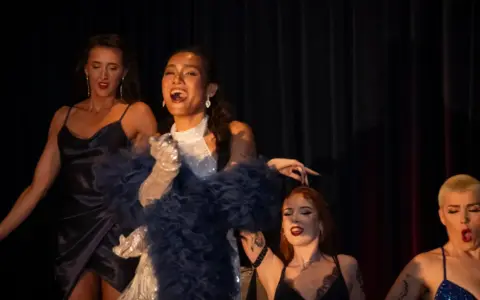
The plot becomes clear, and it could be any cultural family, but we are witnessing the irony of Filipino culture caught in family guilt and obligation by the patriarch. This became a little tiresome, and the suspense of the hardships of the father/son/trans dynamic became didactic. The family guilt, shame and bantering were overbearing and the stigmatisation of being gay, queer, weird, was constantly bellowed out by the victims, with comic verbal abuse, that altered the nature of pity to one of apathy. In saying that, Diana’s deep and moving baritone vocal range is supported by the cast at key stages with beautiful harmonics, which enhanced a dreamy and healing charm, which subdued the tension, suspense and anger of the dialogue and underscored grace and love for family.
Playwright, actor and activist intent on de-marginalising and des-tigmatising the stereotypes of what a non-binary trans Filipino woman is, and Dax Carnay-Hanrahan is Mr Big! She/they is a voluptuous, beautiful human who is sumptuously large, loud and out and proud transwoman with a gorgeous and beaming smile with bags of emotional hardships. Her story reveals the struggles of what it means and feels to be a transwoman through the eyes of those who truly love you – your family!
Mr Big is a play that lifts the spirits of the victim, who triumphantly overcomes the struggles of loss through a series of confessional redemptions with love and compassion. The energy of the Mr Big performance is a testament to the dedicated, passionate Tayo Tayo collective, who have collaborated and developed a fascinating insight into the cultural nuances of a Filipino family through their lens of hope, love, anger, joy, sorrow, death and desire.
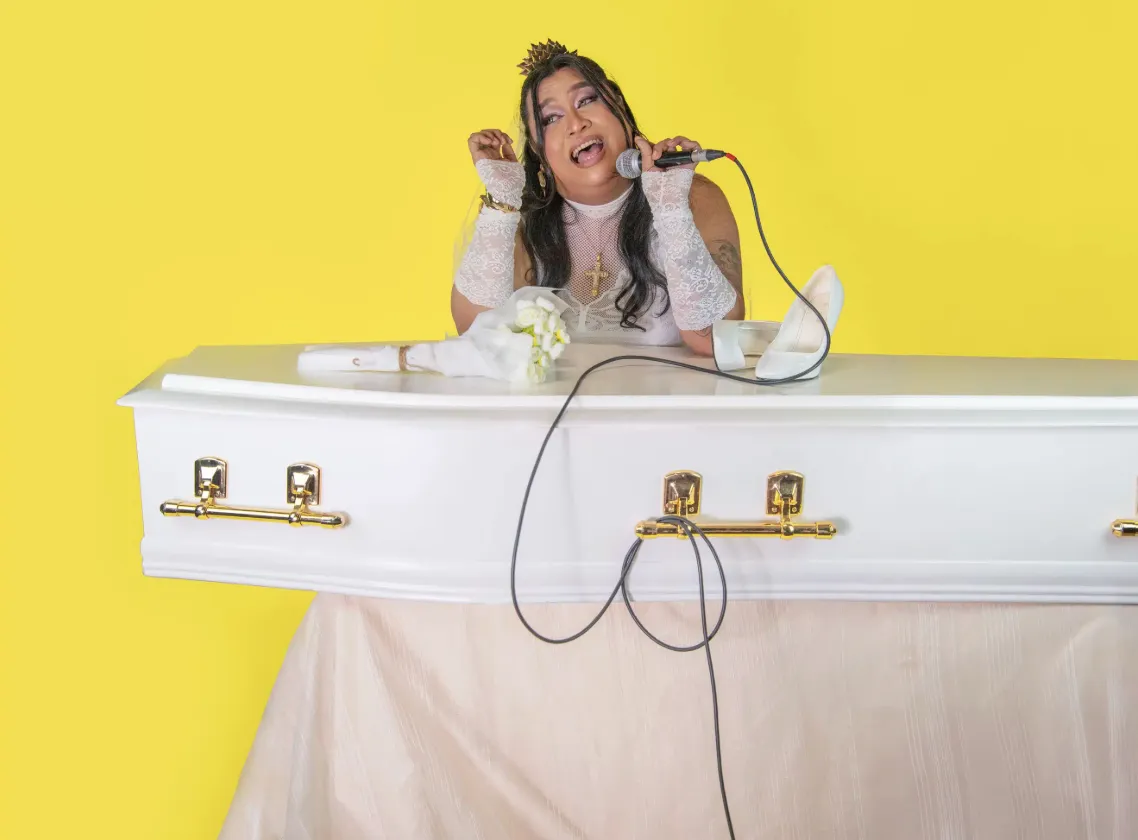
Near the end of the performance there is a delicate moment when Daxie engages with the audience and her facial expressions whispers tunes of joys and sorrow. She is hardly speaking but her vivacious and glamour-shy smile tells us that her heart is shattered,and wishes for the love, and acceptance of her father, which we now see as an object as the lighting cross fades the backlit curtains to reveal a coffin; the father, the tyrant, the sexist homophobe has died!
Who do we pity and who do we scorn in a world that has negative and positive attitudes to body image, and the perception that those who live in glass houses should not throw stones? Throughout the performance verbal stones, pebbles, rocks, and boulders of abuse were thrown at one another to find a place of love, softness, caring and compassion.