What businesses do you run?
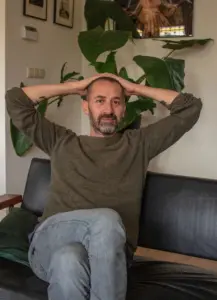
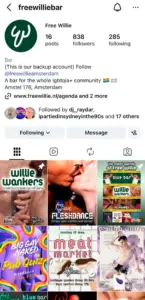
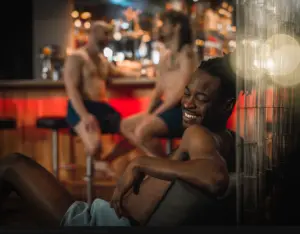
First of all, thanks STUN for giving me the opportunity to speak to you and voice my frustration! I’m originally from Sydney but have been living in Amsterdam for 35 years. Together with my husband Elard Diekman and business partner Wim Peeks we run ‘dance and cruise club’ ChUrch, Sauna NZ and the naked bar Free Willie.
What happened to your businesses social media accounts?
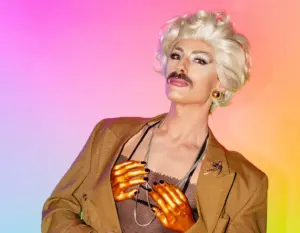
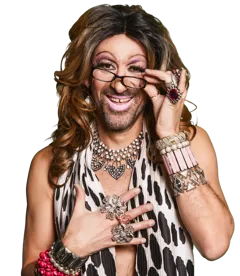
Basically, this harassment has been going on for years and it’s either one of our businesses or some of the festivals we organise (like the Streetheart Festival) or our personal (mainly my Jennifer Hopelezz drag alter ego) Instagram account. As well we are continually being told that we are being shadow banned because of a particular post – we’re usually never told which post this is. Basically, we get these messages almost weekly.
Is this the first time?
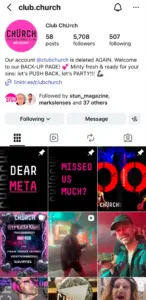
So as I said it’s not the first time but last October they completely deleted our club ChUrch account with 18,000 followers- that’s the first time we have been completely deactivated, with no chance to reinstate our account. Fortunately, the local Dutch politicians picked up on it and as Amsterdam is a tech hub they do have some sway with Meta. The alderman for ICT called Meta and the next day we were all back online again. By the way, it wasn’t just our accounts taken down but it was a whole bunch of other queer Amsterdam accounts, just like this time. We had no option but to set up a new account and we slowly got about 5000 people on our new club ChUrch backup account by the time the original one was reinstated.
Do you know which posts triggered it?
No, that is the frustrating thing, we are very careful obviously what we post and we self- censor ourselves continuously even though everything we post is totally legal under Dutch and EU law. We understand of course that we are dealing with an American based company and they have different ideas on morality and sexuality and nudity so we stick to their ‘community guidelines’ strictly and when we do eventually get our accounts back we see that all our posts are still intact.
Was there any content critical of the Trump administration?
No, we are queer businesses and we keep well away from that- though we have a lot of posts with drag performers and transgender people and that no doubt gets under the (orange) skin of Trump and his gang.
What did you do to appeal it and were you successful? Were the accounts reinstated or did you have to create new ones?
We were down for several months, the alderman couldn’t help this time, so together with a bunch of other queer organizations we decided to pursue legal action. We engaged the law company Brandeis that has had previous success against Meta. The day after we sent our letter to Meta all our accounts were miraculously reinstated- no explanation, no excuses.
What contact were you able to achieve with Meta and what was the quality of the contact?
Before we engaged the law firm, all we got back were automated answers -we never got to have contact with a human, just AI, which is against EU laws. We now have contact with Meta through our lawyers and at the moment it’s best that I don’t say anything beyond that. But rest assured we will not let this go. Because inevitably we will be deleted again within six months and go through this circus again. And it feels so obviously discriminatory and goes so deeply against everything we stand for that it really is time to stand up for ourselves even though it is going to cost us a lot of money and time and energy.
How did it affect your business and being able to reach your customers? Do you have a Plan B to overcome the censorship and to and reach your customers?
We are fairly well known in the Dutch scene but for visitors Instagram and Facebook are absolutely vital to find us. This time Meta even took down our backup ChUrch account – as well as informing us that we will never be able to start a new account that is linked to these accounts – so that means forever being banished from Instagram and Facebook. As well, any other linked accounts were taken down- so that meant that even the private account of our social media guy Caspar was removed. He also does deejaying as a side gig and his DJ Babette account was also permanently deleted, just for good measure.
Everyone is urging us to move to other social media sites or even set up a queer one ourselves but these are not so easy to do. So unfortunately for now we are stuck with Meta. As Caspar said, it’s like ‘going back to your toxic ex’- we really don’t have much of a choice at this stage.
Why do you believe LGBTQIA+ accounts are being targeted and what do you fear will be the result to our community and it’s businesses if we are not able to reliably exist online?
I really do believe it is something to do with the Trump administration and the anti-trans and queer witch hunt run by him and his mates. It reminds me very much of the 1960s when it was police discrimination and intimidation that led to the Stonewall riots and the riots that led to the Sydney Mardi Gras. Although now it is not the police but big tech who are harassing us and intimidating us.
What do you believe is behind the ‘human exploitation’ catch-all phrase that’s being used in these cases?
Anything which is sex-positive or body-positive including sexual health information is called ‘human exploitation’ according to Meta. Meta says it is ‘to safeguard the community’ but I do wonder which community they are talking about because Meta itself is a business which houses many hundreds of thousands of different communities and our community certainly is not feeling safe because of their actions, it’s the exact opposite.
You are part of an unprecedented legal challenge by Dutch queer organisations and digital rights advocates against Meta and its digital censorship. What is the status of this case at the moment and do you expect it to be successful?
We are continuing to pursue legal action and possibly we will set up a crowdfunding action because this will not be cheap. I think that’s also the strategy of Meta – make it so expensive that nobody actually goes to the trouble to go to court. But we have such a wide range of organizations behind us that we plan to keep pushing forward.
What other cases of digital censorship are you aware of in the Netherlands?
European and Dutch laws are very clear and very nondiscriminatory. America on the other hand has become a rogue state under Trump and not only eliminating its anti-discrimination laws, and bringing in new anti-trans and anti-queer laws, but it is also going all out to attack the European laws protecting us. It’s all very scary at the moment and making people realise that we are relying too much on America- hopefully that will change in the future.
What should Meta actually be doing to treat LGBTQIA+ account holders with respect, such as providing guidelines and personalised feedback etc.? Or is something like creating an exclusively LGBTQIA+ social media platform where we set the rules the answer?
As I said creating our own media platform sounds like a great idea but so many people have tried to create new platforms and how many actually succeed? I think it’s a lot harder than we think – we are stuck with our “toxic ex” for the time being.
How will you use and instruct employees to use the Meta accounts to avoid them being pulled offline again? What sort of chilling effect does that have?
We definitely do censor ourselves and I think that’s exactly what Meta and Trump want. We are all now falling under American laws which do not provide protection anywhere near what European and Dutch laws provide.
Interview by Danny Corvini