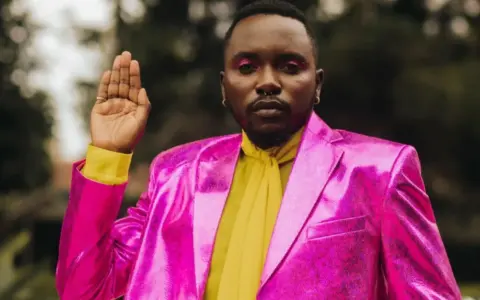
For 23‑year‑old Papua New Guinean–Australian musician and multidisciplinary artist Tivien Andrews‑Homerang, creativity is part of their identity. Their work spans music, acrylic and oil painting, performance and immersive installations stitched together from ancestral memory, personal transformation and an ever‑evolving exploration of self, writes Jo Falvey.
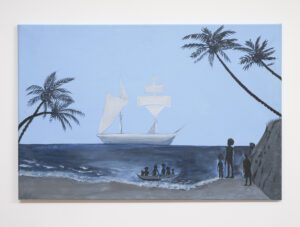
This informed Tivien’s contribution to Paradise, a recent exhibition at Canberra Contemporary Gallery. Their canvases confronted the dark history of ‘blackbirding’, which was the kidnapping and forced labour of Pacific Islanders on colonial Australian plantations. “My mum is from New Ireland, Papua New Guinea, and some of the people taken were their ancestors.”
Transitioning into self
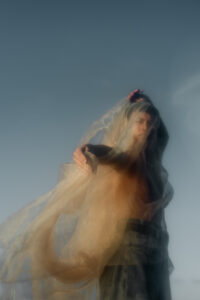
Alongside their artistic evolution, Tivien’s gender journey has been one of deep questioning and necessary honesty. “After a relationship, I really started to ask myself: What do I want out of life? What makes me happy?” For years, Tivien had shaped themself to fit others’ expectations. In Year 12, commercial modelling pushed them toward femininity with long curly hair, lingerie shoots and campaigns that preferred the palatable ‘mixed girl’ aesthetic.
It built confidence but also discomfort. “I would hear queer women talk about how powerful they felt when they were feminine. But I felt the opposite. I felt so uncomfortable.” Clarity came late one night when Tivien grabbed their dad’s razor and shaved off their hair. “I felt so elated because no people looked at my hair first”.
Hair had carried racial trauma too. As a child, teachers called Tivien ‘fuzzy wuzzy angel’, classmates compared their curls to a poodle and strangers touched their hair without consent. “That really stuck with me.” Now, they smile: “It’s a full circle moment because I’m growing it out again, down to my shoulders.”
Finding sound in the mess
Music began as an experiment, although “I had a pretty basic setup,” laughs Tivien. An old Mac, YouTube beats playing through speakers, a microphone held toward the laptop, recording music hunched over their bed. In high school, they strummed ukulele “unprofessionally” and mimed clarinet parts in band. “My music theory isn’t there. It’s all by listening.”
After shaving their head, the creative energy poured out. Processing the end of what was a four‑year relationship, Tivien spent time on their grandmother’s property writing songs, recording and painting. These works formed their first solo exhibition, Heartbreak and Herbal Tea, at the Belconnen Community Centre. The show was an immersive journey through four phases of heartbreak: Sadness and solitude; Rage and revenge; Growth and decay; Peace and paradise. Each section had its own colour palette, curated teas, tactile sculptures, with Tivien’s EP was playing throughout. “I tried to hit every sense. I think it really helped me and a lot of people connected with it.”
Growing up in Canberra
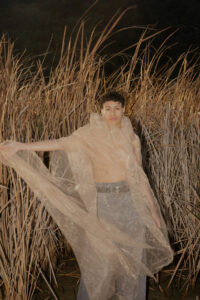
“Yes, it’s the capital but it had small‑town energy and I was carrying a lot of trauma from high school,” says Tivien. The city felt like a web of familiar faces and reminders but things shifted once they found queer community and had space to breathe. “I really love this city now. Unlike bigger cities where everything is on the street, here you must try to find people, find your community.. and that makes it feel real.”
Tivien spent 18 months as a youth worker with queer young people, creating art programs and community spaces. Despite progress, they fear schools remain hostile for many. “High school is still a very repressive place for a lot of marginalised youth.”
Arcane: becoming something new
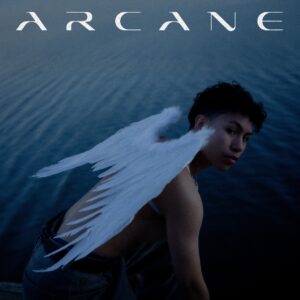
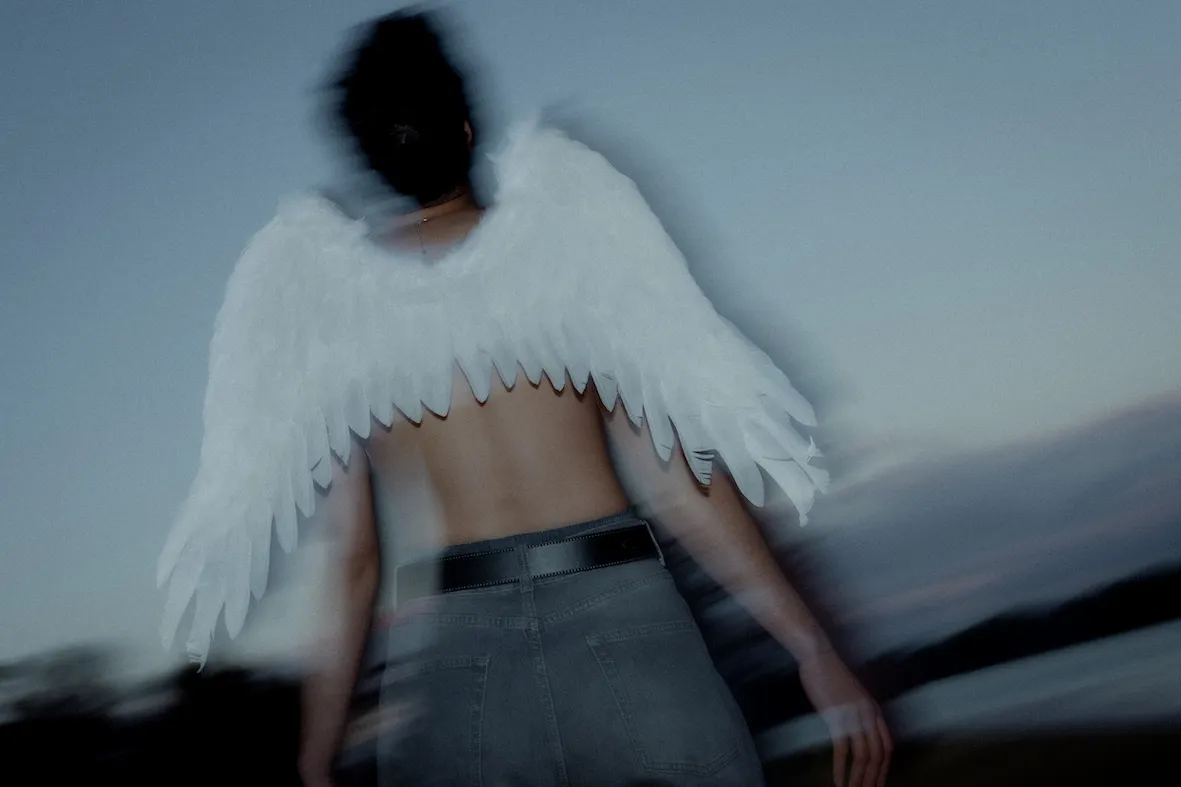
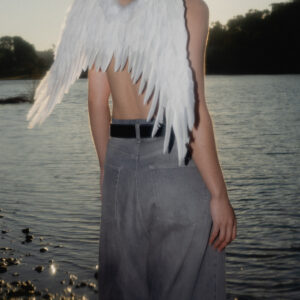
Their latest project, Arcane, marks a sonic and emotional shift. With help from collaborator, JP, Tivien re‑sculpted their sound and moved into visual storytelling. They sourced realistic angel wings from California and worked with photographer Cassie Abraham to craft ethereal imagery. “Arcane was about leaving toxic cycles. Not about feeling healed but about the space in between. That void where everything is unfamiliar but you know you must build something new.”
In the track Drive, they explore pre‑transition and transitioning. “It’s the internal conversation we have with our past selves, and the person we’re becoming.”
Another song, Dark Glitter, draws on their PNG heritage. “Glitter only shines if there’s shadow. That’s how I feel about my ancestors, like something powerful living in the darkness.”
Arcane was recorded before they began testosterone. “I’ve only done one live performance since my voice started changing,” Tivien admits. “It’s been difficult but rewarding. It feels like a second puberty and now I’m relearning how to make sound.”
Tivien is supporting [Lover] at Dissent Bar, Canberra on April 17.
Follow Tivien at @iamtivien and @tiv_creates
Check out their videos on YouTube (The Adrenaline video, below, features cinematography by Holly George)