The Sydney Mardi Gras Parade might just look like a glittery wonderland, but underneath, it’s a full‑scale demonstration of physics, physiology and social neuroscience in real time.
The Parade route is around 3km and can mean up to 45 minutes of continuous movement for participants. Spectators can be there for five hours or longer, with over 200 floats and more than 12,000 marchers moving through Sydney streets in support of the LGBTQIA+ community. To sustain long periods of activity like this, the body draws on three overlapping energy systems, which switch in and out as the music, pace and energy needs change:
- Phosphocreatine for short bursts like vigorous fan clacks, high kicks, or hair flicks. It rapidly regenerates adenosine triphosphate, the molecule that powers muscle contractions.
- Anaerobic glycolysis powers short periods of intense choreography, lasting a couple of minutes. It works without oxygen, producing the lactate that contributes to the all-too-real leg burn.
- Aerobic metabolism uses oxygen to break down carbohydrate and fat, helping sustain bodies during lower intensity but prolonged movements, like a great two-step.
An exciting, loud, buzzy environment can show up in the body as a stress response. The systems responsible for how we respond to messages of excitement in the brain are the parasympathetic and sympathetic nervous systems. These adjust simultaneously, working hard to fuel physical and emotional reactions.
The sympathetic system is responsible for activating blood flow, creating things like a racing heart or ‘butterflies’, as a self-defence early warning system and a response to excitement. The parasympathetic system is responsible for the body’s unconscious actions, like sweating, digestion or unlocking a clenched jaw, and provides a calming, joyous effect on the body immediately after intense positive excitement to let it know it is safe.
The thermodynamic effect
The late-February heat adds another layer of scientific complexity for Mardi Gras goers.
Sweat only cools the body when it evaporates off the skin, so outfits can quickly create a micro-climate. Humid weather, heavy sequins or synthetic costumes and wigs trap heat and slow evaporation. This creates a real physics problem as body heat builds and cooling becomes harder.
Crowds add extra body heat, increasing heat gain. The body ramps up sweating to cool itself, depleting fluid and electrolytes faster than you might expect. That’s why proper hydration before, during and after the parade isn’t just good advice, it’s critical.
Blisters and chafing are also common in this microclimate. They form through shear force, a concept found in many sciences including physics, anatomy and engineering. Shear force describes how surfaces respond to types of stress in opposite directions, including pressure or tension – exactly what happens inside a shoe when the upper layers of the skin experience friction or force, known as shear deformation.
This action increases tiny movements between sock, shoe, bone and skin, producing small tears and splits that fill with fluid as a defence mechanism, creating a fully formed blister within 2 hours.
Can’t stop, won’t stop
Events like parades involve a lot of repetitive, sustained muscle work, and for many people that includes plenty of ‘eccentric contractions’ – movements where muscles lengthen under tension. That might be stepping, stabilising, braking a wheelchair or absorbing vibration from the ground or chair.
Stabiliser muscles stay busy at events like Mardi Gras. For some people that may mean ankles, hips and core constantly adjusting on uneven surfaces. For others, it’s in the shoulder, upper back and trunk managing propulsion, momentum, posture and balance with a mobility aid or wheelchair. Assistive technologies also engage stabiliser muscles differently, so energy management matters for everyone.
Even facial muscles can become fatigued. The zygomaticus cheek muscles and orbicularis oculi in our eyelids are responsible for cheering, smiling and eye crinkling. These small but expressive facial muscles house powerful nerves, and hours of fun can render them just as tired as the legs.
Why it still feels amazing
Despite the muscle load, heat and blisters, participating in a Mardi Gras Parade feels incredible because of what happens in the brain when we experience a sense of belonging in a group.
Humans have a ‘social brain network’ shaped by evolution, including regions responsible for perspective‑taking (medial prefrontal cortex), social reasoning (temporoparietal junction), and detecting belonging (anterior cingulate cortex). It also includes key reward pathways – such as dopamine release via the mesolimbic pathway and ventral tegmental area – which activate during positive social experiences like acceptance and connection.
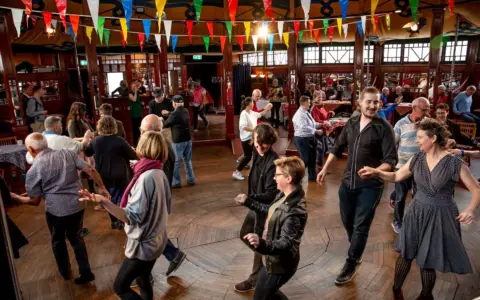
Social neuroscience and psychology research consistently show that when people move in sync such as walking, dancing, clapping or rowing – our brainwaves start to synchronise.
This neural alignment increases feelings of unity, trust, cooperation and willingness to support others. It also boosts oxytocin, dopamine and endorphins, raising pain thresholds and producing the euphoric ‘collective joy’ seen after many performances and group events.
These positive social cues can simultaneously activate calming parasympathetic nervous systems. This doesn’t switch off the body’s sympathetic response to exercise, your heart is still pumping hard to power your movement, but it does layer in a sense of safety and improved emotional regulation. That combination is why people can push through fatigue and come away feeling energised, bonded and uplifted by the experience.
Identity, visibility and psychological safety
For LGBTQIA+ communities and allies, Sydney Mardi Gras is a space where identity and expression is seen and mirrored.
When people feel safe, accepted, and recognised as part of a group, the brain’s social threat system become less active. This frees up cognitive resources – especially for those navigating minority stress, a chronic state of vigilance caused by discrimination.
Belonging also strengthens brain regions involved in self‑processing and self-concept, which research links to greater resilience, wellbeing and positivity.
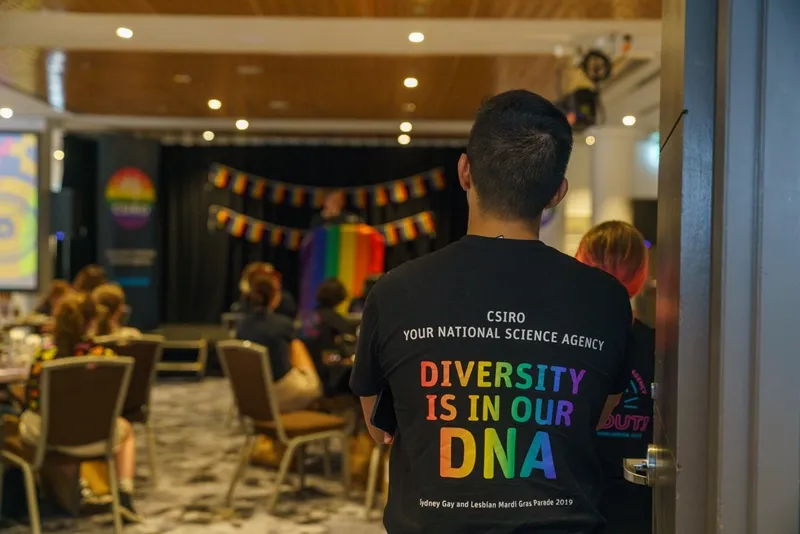
Pip Cantrall, CSIRO Director of Organisational Development and registered psychologist said that belonging is a key driver of wellbeing and performance.
“Allyship benefits everyone – and it’s a behaviour. When people actively listen, speak up, and stand alongside underrepresented colleagues, it reduces stigma and minority stress, creating a culture where more people can thrive. Interestingly, research shows that being an ally helps build empathy, courage, and leadership capability for the ally themselves.”
Acceptance and allyship have a protective effect on our brains, while exclusion activates pain circuits associated with physical pain.
Lower cortisol (the stress chemical) allows people to access brain regions responsible for creativity and connection, an optimal state for those researchers working to solve the world’s greatest challenges.
“The neuroscience aligns well with what we know from organisational psychology. When people feel safe, valued and able to be themselves, their brains shift out of threat mode and into connection and creativity mode,” said Pip.
“Diversity lights up new neural pathways, allyship lowers stress, and shared experiences like Mardi Gras activate the parts of the brain that help us feel bonded and hopeful. So, when we show up for Mardi Gras, we’re not just celebrating. We’re helping to build healthier, more inclusive communities at a very human, biological level.”
Reproduced courtesy of the CSIRO.