MATURE SKIN
Until 22 March at the Northcote Town Hall, Melbourne
3 out of 5 queer stars
Reviewed by Christos Linou
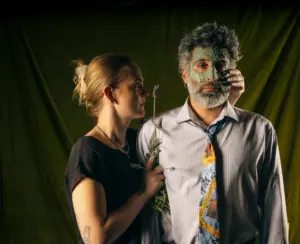
Mature Skin is an erotic dark comedy about a lustful affair between a transgender woman and an older gay man who meet indiscreetly at an imaginary Melbourne nightclub with a fetishisation for sex and contaminated skin. It explores the night and the days after a one-night stand, which escalates into a play of fetishising the body types.
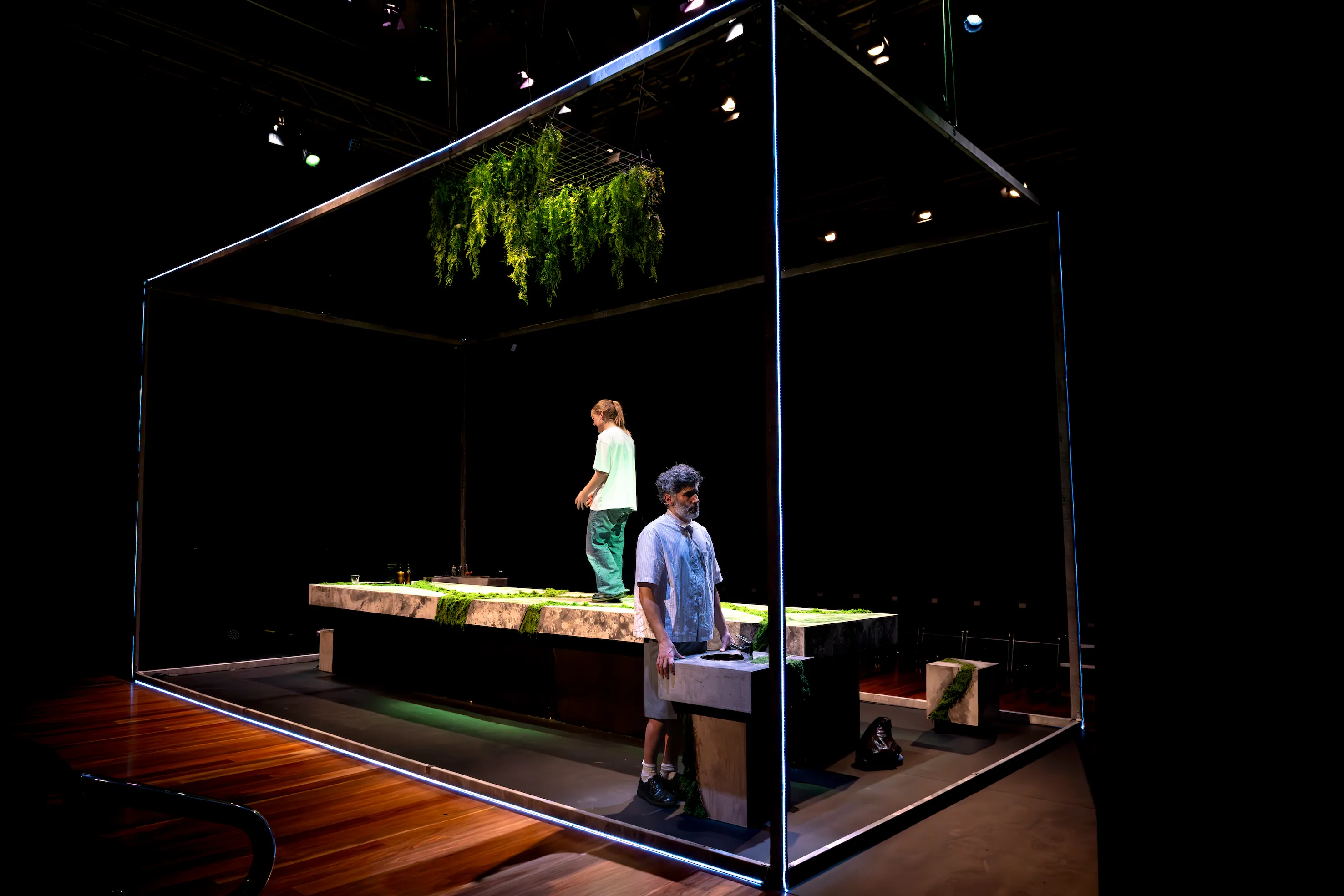
The elegance of the geometrical set design places the audience across from one another and establishes a focal point, akin to a witness, on the central object, which serves as the nightclub podium, cosmetic workbench and place of copulation.
The performance explores the psychological nuances between queer identities, of a transgender woman and of an gay man twenty years older, and navigates their sexual desires and various acts of sado-masochistic authority over each other.
However, the performance falls short in exploring the undertones of the trans protagonist (Jasmine), played by Bailey Ackling Beecham, and of the gay antagonist (Paul), played by Peter Paltos. Both actors deliver a complete and detailed dialogue of their lives and how each other has come to explore the darker sides of themselves through the erotica of one-night stands and revealing their sexual skin kink fetishisation. There are moments of empathy and gentle intimacy as the couple flirt clumsily around one another, which explode into hard, brazen mime-fucking where yelps, screams, pants and wailing are sounded out to the deep pulse of the soundtrack. The actors have a compelling task keeping the audience’s attention with jabs of ironic joy and sorrow of their life’s misfortunes and this seems to be the foundation of their affection or lack of affection for each other. The layers of the first encounter dissolve into opportunistic deception, character assignation, body-shaming, ageism, self-pity and the queer victim (bring out the violin).
The performance emanates empathy for transgender rights, where the risk of revealing affection and vulnerability is stigmatised, becoming a weapon for the ignorant. Instead, I witnessed an ongoing squabble about queer class levels of the haves and have-nots. Jasmine is in haste about her transgender body image and needs validation that she deserves what the others have, and it turns out that Paul is the other, who has it – the wealthy older gay man who suggestively becomes the ‘sugar-daddy’ metaphor. Jasmine’s voice of queer protest exceeds compassion and becomes a platform for trans inequality, and Paul is the subject of her attack, which becomes didactic and an unrelenting message of guilt and anger, which triggers the character’s brutal truth of their intentions. The performers swing back and forth at each other in a cat-and-mouse game of affection to rage, and the changing lighting states establish the various locations to set the moody tones of lust and suspicion.
When Jasmine prowled upon Paul’s naked chest, he screamed in pain about his contaminated skin riddled with eczema. The audience gasped when Jasmine squeezed and popped a boil of pus from Paul’s shoulder, saying, “let me rub your eczema inside me,” and a pus of fluid jettisoned across the stage. Each to their own, but the act of licking and sucking a person’s contaminated eczema pus as an element of kink sado-masochistic erotica crosses the boundary of LGBTQIA+ ethics and sexually transmitted illness.
The performance created an atmosphere of deceit through sexual gratification and emotional domination via guilt and shame, questioning the obligations of how desire, lust and sex are negotiated, which was lacking in a queer solidarity for each other’s hardship. In saying that, the rights for all LGBTQAI+ people are paramount and need visibility and a warranted position to be seen and heard, and this production is a work that confirms this, but more so, it brazenly highlights the normality in human behaviour, in searching for love, intimacy and compassion.