
Many of us have stopped in Cooma for a rest and refresh before heading to the Snowy Mountains but did you know Cooma is a significant site of queer history? Cooma Gaol (also known as the Cooma Correctional Centre) is the only known prison in the world that was specifically used for the imprisonment of men based on gender identity or sexual orientation. This occurred from 1957 and ended in 1984, when homosexuality was decriminalised in NSW.This history is now recognised with the goal being listed on the State Heritage Register.
Playwright Mark Salvestro, who was born and bred in Cooma, had no idea about the gaol’s troubled history. “Growing up, I assumed Cooma had no queer history. When I found out about the gaol, I thought why didn’t we know about it?”
Mark’s play, The Queen’s City of the South, was inspired by the gaol’s queer past. Its limited season last year at Qtopia was highly praised and explored the impact of secrets and challenges of growing up queer in regional Australia.
Conversations about the gaol started in 2022 after the release of Patrick Abboud’s podcast, The Greatest Menace. “The practices that led to inmates being incarcerated at Cooma Gaol and the treatment they received while they were there had lifelong impacts for all of those involved,” said Patrick. He said the heritage listing was a step towards healing for those former inmates still living with past traumas and commemorating those who have died.
NSW Minister for Corrections, Anoulack Chanthivong, said it was important to acknowledge the gaol’s past. “I am pleased to see Cooma Correctional Centre acknowledged by the NSW State Heritage Register for the unique and challenging role it played in our state’s history. On behalf of the Minns Government I reiterate our apology [in 2024] to those who were incarcerated unjustly due to discriminatory laws for homosexual acts.”
Mark said now the gaol’s history is visible, it has led to positive steps for Cooma’s LGBTIAQ+ people. “Jindy Pride has been established and they raised the Pride Flag at Cooma Gaol Museum during Pride Month (this year). The council and police have been supportive.”
The gaol isn’t the only part of NSW queer history recognised by the heritage register.
Bushrangers Captain Moonlite (Anthony Scott) and James Nesbitt’s graves were listed on the register to recognise the tragic story of the pair. They met at Melbourne Goal in the 1870s and lived together when they were released. Historians understand they were more than close inmates.
James was shot dead after a hold-up went wrong near Wagga Wagga and it is understood he died in Captain Moonlite’s arms. Captain Moonlite’s dying wish was to be buried alongside James. It was granted in 1995 when he was exhumed from Rookwood Cemetery and reburied in Gundagai, near James’ unmarked grave
“Their graves offer a rare window into same-sex relationships in an era when homosexuality was harshly suppressed by the state, challenging typical stereotypes of Australian bushrangers and providing one of the few publicly acknowledged same-sex relationships of the 19th century,” said a spokesperson from the NSW Department of Climate Change, Energy, the Environment and Water.
Other significant NSW LGBTQIA+ sites listed on the heritage register include:
-
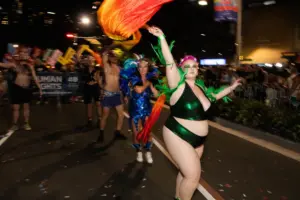
Mardi Gras Parade Route
-
Elsie Refuge in Glebe
-
Imperial Hotel at Erskineville
-
Palace Hotel in Broken Hill