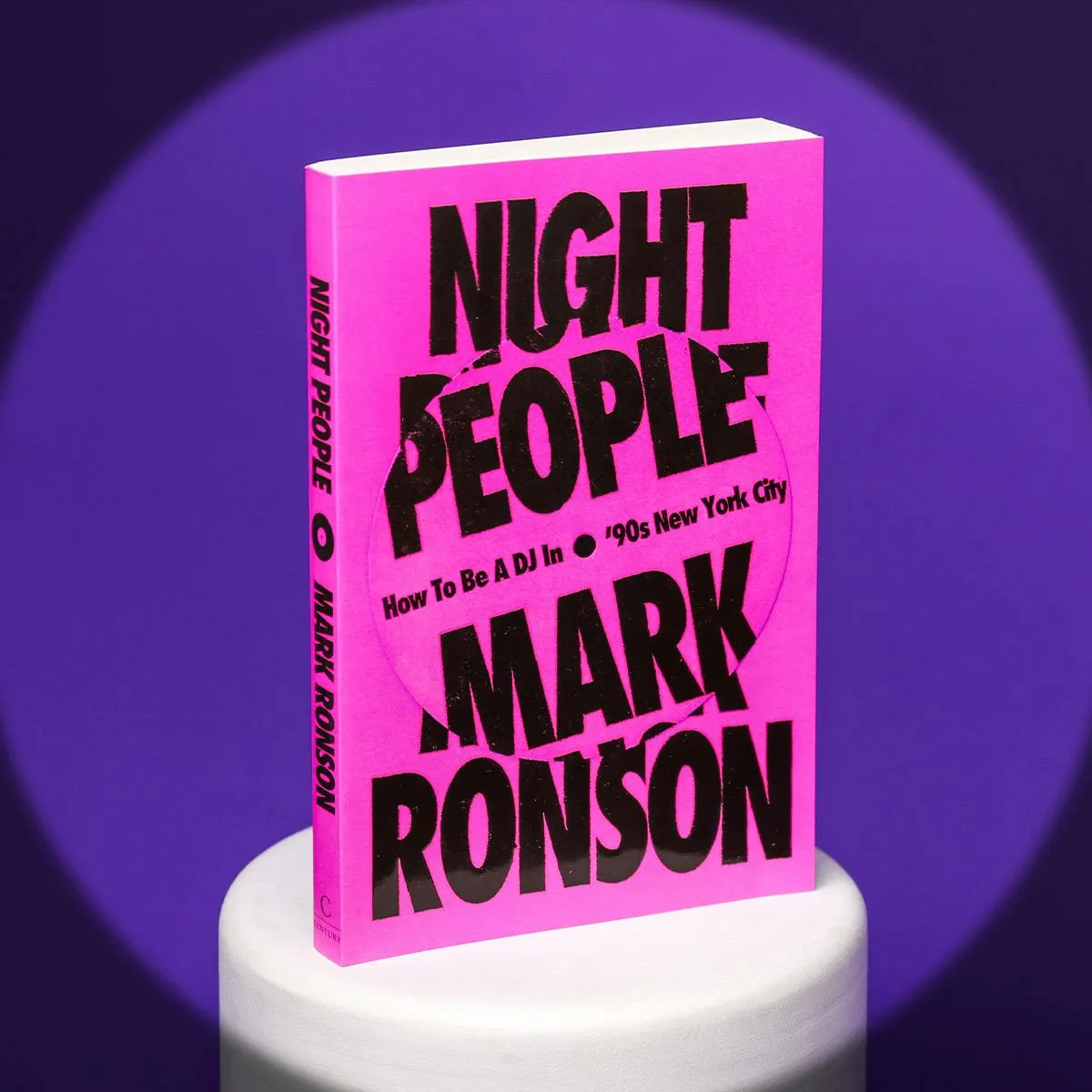
‘NIGHT PEOPLE’ by MARK RONSON
Published by Penguin Random House
4.5 out of 5 stars
Reviewed by Danny Corvini
*
Mark Ronson is best known to most people as the powerhouse producer behind the hits for singers like Amy Winehouse, Bruno Mars, Lady Gaga and Miley Cyrus.
However, this book is about a wildly different, far earlier time of his life when Ronson was a young vinyl DJ trying to climb the club ladder of ‘90s New York.
A time when hip hop turntablists ruled Manhattan.
The action starts in his late teens/early 20’s when Mark found himself having to strike a balance between university and home-life with his rapidly-evolving nocturnal life.
And with circumstances distinct from any other DJ on the block: a British-American dual citizen who’s Jewish, with Mick Jones from Foreigner as his step-dad and hedonistic parents who would party all night.
Would he make it in this black music world where street cred is everything?
Mark Ronson doesn’t fit easily into the stereotype of a namedropper but he still manages to slide a veritable wish-list of other ‘90s legends onto his pages. Some of those that find their way into his story are Lady Miss Kier and DJ Dmitry from Deee-Lite, Sean Lennon, Michael Alig, Junior Vasquez, Biggie, Jay Z, Tupac, DJ Premier, Sean ‘Puffy’ Combs, Prince, Missy Elliott, Janet Jackson, Tommy Hilfiger and Aaliyah, to name a few. Even Donald Trump gets a mention and oh, the joy.. it’s about him being refused entry into a club!
However, it is in documenting the action, the sights, sounds—and yes, the smells—of New York’s bars and clubs of the ‘90s that Night People soars. It was a time when obscene volumes of street culture was being created, a period cut tragically short by NY Mayor Rudy Giuliani’s war on nightlife and the gentrification of Manhattan that followed.
Mark Ronson was right there in the thick of it and usually hauling multiple crates of records to a gig at the time.
Ronson writes with a fantastic sense of humour and manages to recall the minutiae of conversations he had and records he played (and even what records he mixed them into). There are no photos anywhere in the book but an accompanying Spotify playlist that features every track mentioned ensures that the music itself has the last word.
He writes about drugs and anxiety and perfectly describes the paradox of being a DJ (or indeed, any other type of performer) who experiences an awesome sense of connectedness to others while playing in front of a crowd and then a crushing loneliness when the lights come on and it’s all over.
I was somewhat surprised by the generous amounts of soul-baring and even the degree of self-depreciation that sometimes appears, which occasionally sounds like imposter syndrome. But I read it as a very reasonable, human need to earn his ‘spot’ in a black music world that made him so very famous and a sense of needing to apologise for some of the privilege that helped him get there.
Even more than privilege though, it’s Ronson’s sheer bloody-minded talent—expressed as a DJ, producer and now as a music journalist—that should really be recognised.
Highly recommended.