My name is Emma Batchelor and I am a queer, Autistic author, artist and advocate from Kamberri. I am currently developing a new novel, Bloomwaves, an experimental literary work about community, queerness, and the messiness of making art for and about the people you love.
Inspired by recent encounters with queer artists making powerfully personal work, often within a collective, I am interested in generating new forms of fiction that emerge not only from the self but from networks of embodied, intergenerational exchange.
Alongside collaborations with a group of contemporary queer artists, I have been conducting research on the Bloomsbury Group: a radical circle of early 20th-century British writers, artists, and thinkers, including Virginia Woolf, her sister Vanessa Bell, and Vita Sackville-West, Woolf’s lover and muse.
I am interested in placing this historical example of queer artistic collectivity into conversation with contemporary experiences, revealing continuities and divergences across time and place, allowing for commentary on found family, artistic community, idolism, musehood, and the complexities of carving out alternative ways of living and working.
As part of the creative development of this work, I took myself on a little pilgrimage to the homes and gardens in which many members of the Bloomsbury Group met, lived and created work. For fellow queers interested in making their own Bloomsbury pilgrimage, here are some places you might consider.
Bloomsbury, London
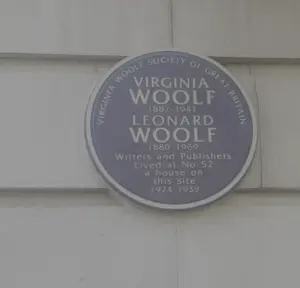
The Bloomsbury Group take their name from the area in which many of them lived when in London: Bloomsbury. As well as being home to The British Museum and other cultural institutions, Bloomsbury is known for its beautiful houses often situated around leafy squares. Members of the Bloomsbury Group lived in multiple houses over time, the primary location being 46 Gordon Square. Later, Virginia and Leonard Woolf lived in 52 Tavistock Square, from where they ran The Hogarth Press and Virginia wrote many of her major works.
Bonus
- Portraits of multiple members of the Bloomsbury Group including Virginia Wolf and Vanessa Bell are housed within the collection of The National Portrait Gallery in London.
- The Victoria and Albert Museum also houses artworks, furnishings and other decorative objects created by members of the Bloomsbury Group and the Omega Workshops, a design business developed by Roger Fry, Vanessa Bell and Duncan Grant.
Charleston Farmhouse, Firle
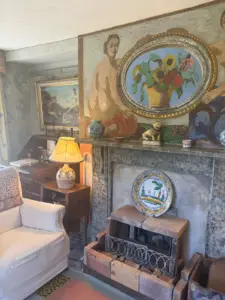
Located near the village of Firle, Charleston Farmhouse was the country home of Vanessa Bell and Duncan Grant. Also home to many other members of the Bloomsbury Group over time, some of whom were also Grant’s male lovers, the farmhouse was decorated in the now established Bloomsbury style with murals, painted furniture, ceramics, paintings, textiles and various creations from the Omega Workshops.
As well as the historic farmhouse are exhibition and workshop spaces, a shop and a cafe and of course the beautiful gardens which were redesigned in a southern European style.
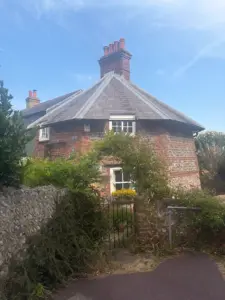
The Round House, Lewes
Virginia Woolf and her husband Leonard were the brief owners of this historic house in the medieval town of Lewes. Located in Pipe Passage, the house is a converted base of a windmill with beautiful gardens on all sides.
Also in Lewes is a secondary Charleston site with exhibition spaces, a shop and a cafe.
Monks House, Rodmell
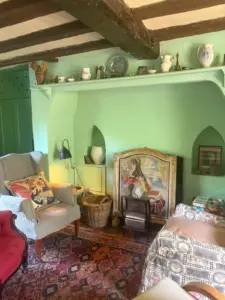
Not long after purchasing the Round House, Woolf found Monks House, a much larger house and garden in nearby Rodmell where the couple soon moved. Over many years Leonard and Virginia began renovating the property and developing the garden. As well as installing practicalities such as running water and heating, the Woolf’s commissioned artwork and furnishings from Vanessa Bell in the Bloomsbury style and built a writing lodge at the back of the garden.
Bonus
- The River Ouse, where Virginia Woolf died on March 28, 1941 is a short walk from Monks House.
Bonus: Queer Bloomsbury Festival
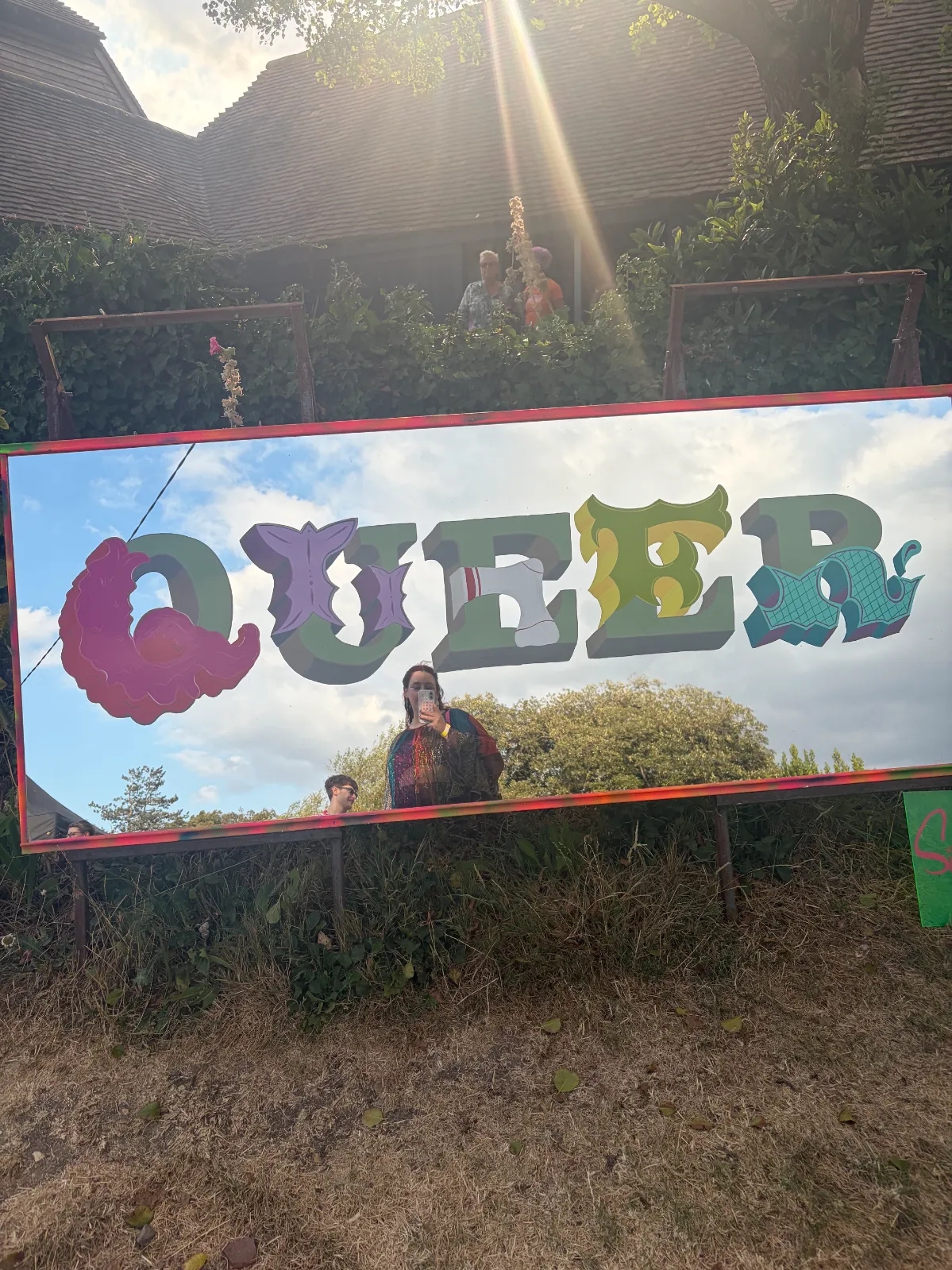
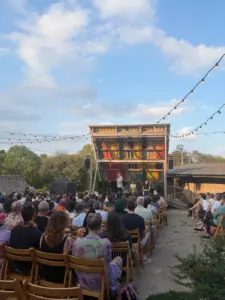
Charleston Farmhouse hosts various arts based events throughout the year including the Queer Bloomsbury Festival. I planned my trip to coincide with the festival, a celebration of contemporary queer culture in conversation with the historic house and garden. The evening unfolded with a specially-commissioned talk with writers Travis Alabanza, Shon Faye, Jodie Mitchell and Neil Bartlett, followed by a Queer Fayre and dance party. I was particularly excited to see Duncan Grant’s erotic drawings on display in the studio as part of the Festival.
Bonus: Queer bookshops in London
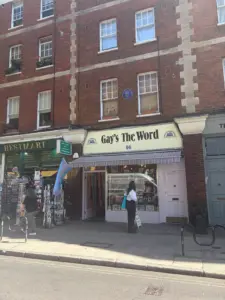
- Gay’s the Word – This bookshop located on Marchmont Street in Bloomsbury London is the oldest LGBTIAQ+ bookshop in London. Founded in 1979 by a group of gay socialists, the bookshop offered a safe space for members of the queer community to gather and connect with literature that mainstream shops refused to stock.
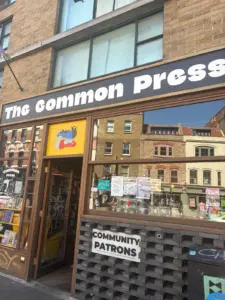
- The Common Press – With two locations, The Common Press is London’s first consciously queer intersectional bookshop. Like Gay’s the Word, this not-for-profit provides a sanctuary for LGBTIAQ+ literature, arts, culture, and community.